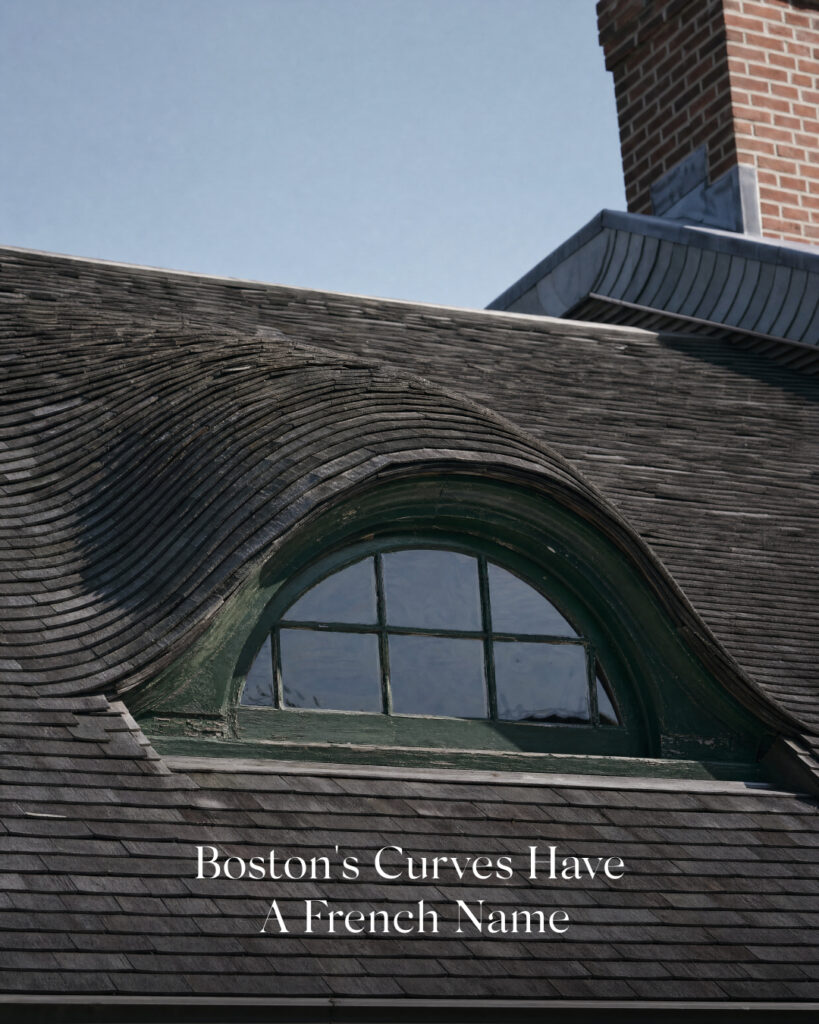
In 1765, a master carpenter in Rouen named Nicolas Fourneau designed and built a pair of guitardes, the elaborate curved dormers that sit on a roof like jewelry on a coat. Two years later, he published a treatise on how it was done, the culmination of nearly twenty years spent teaching the geometry to other guildsmen. What followed was a fashion with a purpose. Through the nineteenth century, clients and architects who wanted it known that they had hired the best carpenters in the region commissioned increasingly complicated dormers, and carpenters obliged, competing to build the hardest thing on the street.
The dormer was an advertisement. It was mounted on the roof, where everyone could see it and almost nobody could copy it.
The discipline behind that work is called stereotomy, and in the French tradition it goes by a better name: l’art du trait, the art of the layout. It is the practice of turning a curve on paper into a curve in wood. Full-scale working drawings, nets and templates, every junction resolved before a saw is picked up. The tools are a pencil, a straightedge, and a drafting triangle. Louis Mazerolle’s 1866 manual on the subject remains in use, and much of the joinery underneath a guitarde turns out to be ordinary mortise-and-tenon.
North Bennet Street School opened in the North End in 1881 to teach immigrants a trade. A century later, in 1982, it hired a woodworker named Robert Adam to teach carpentry; he spent three years researching what a preservation curriculum would need, consulting the National Park Service, Historic New England, and the National Trust, and in 1986 the Preservation Carpentry program admitted its first class. This year is its fortieth. Steven O’Shaughnessy, who graduated from it in 1999, now runs it.
If you own a period house, the survival of these trades is critical. The program admits once a year, in September, and its maximum enrollment is twenty-six students across both years. Two nine-month academic years, seventy-two weeks, 2,340 hours, benches occupied from 7:15 in the morning until four in the afternoon. The school reports that more than ninety percent of graduates work in the field, at the National Park Service, Historic New England, Mount Auburn Cemetery, the Historic Charleston Foundation. NBSS describes it as the only full-time hands-on program of its kind in the country.
Roughly a dozen preservation carpenters finish there each year. That is the annual supply, for New England and for everywhere else that calls.
The school also teaches the trade itself in short courses. One of them builds a scaled eyebrow dormer over a single week, working from geometry transfer through templates, timber layout, framing, sheathing, and finished roofing. Patrick Moore, a Canadian carpenter who completed the Tour de France with the Compagnons, taught it and, in 2013, became the first person in the Western Hemisphere to be recognized as a Compagnon Passant Charpentier.
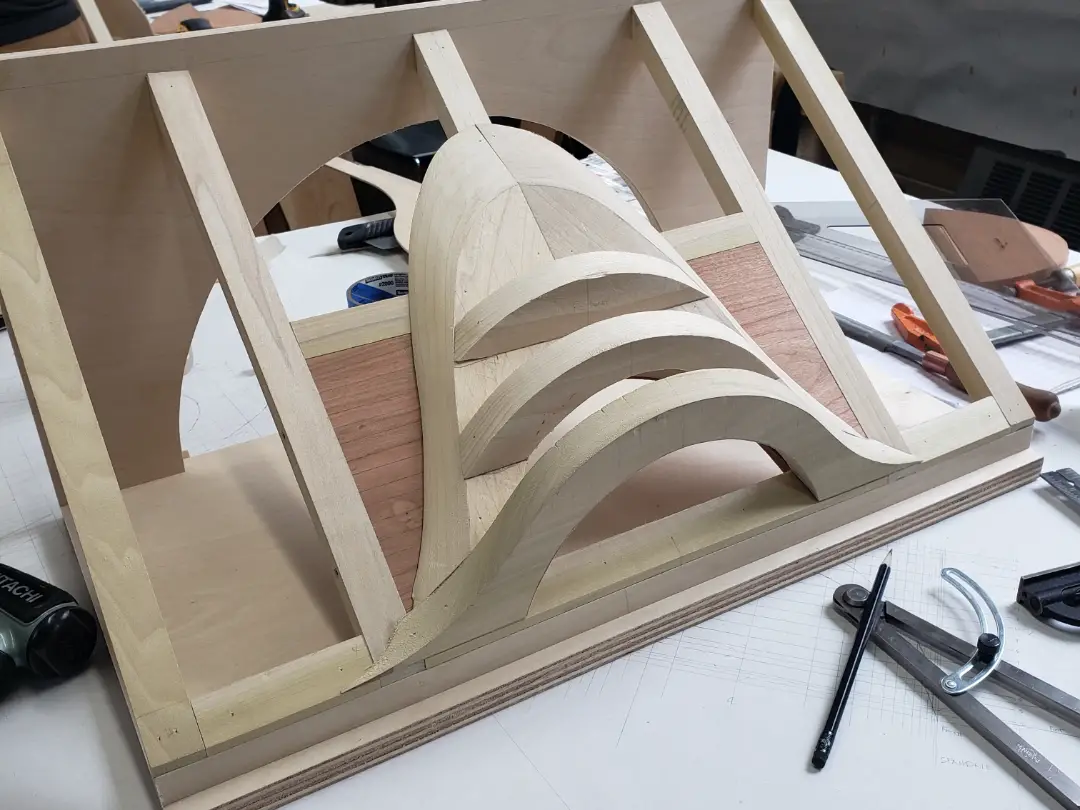
In more than twenty years around houses built before 1900, I have learned that the first question about a serious restoration is not what it will cost. It is who is available, and when. Quartersawn oak can be bought. Slate can be sourced, salvage can be found, a budget can be raised in an afternoon. The drawing arrives in the person of someone who spent two years at a bench learning to see a curve in three dimensions, and there are not many of them.
This is the unlisted line item behind every bow front, curved stair, and eyebrow dormer in Beacon Hill and the Back Bay. A seller who has already done that work is holding something a buyer cannot reproduce on his own timetable, because the schedule belongs to a few dozen people who are booked.
Fourneau’s carpenters built curves to demonstrate their skills. An eyebrow dormer on a Boston roof says what it said in Rouen in 1765: someone who knew how to craft this was here. In September, twenty-six benches on North Street get assigned again.