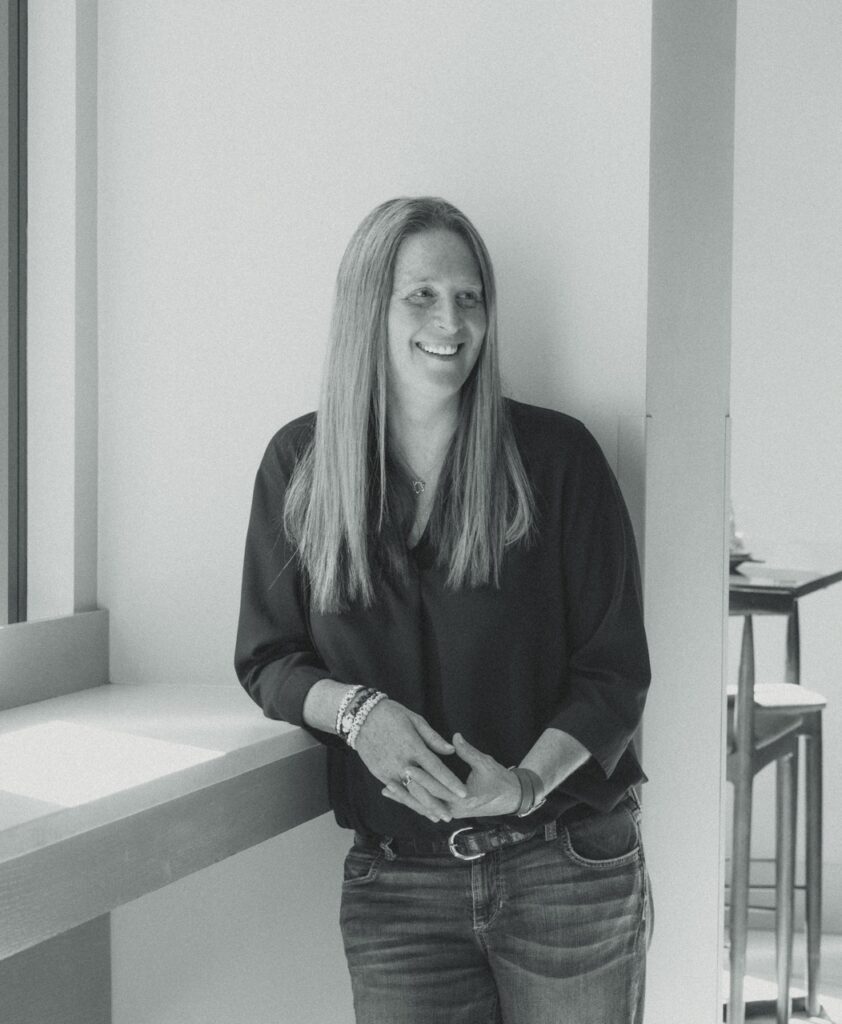
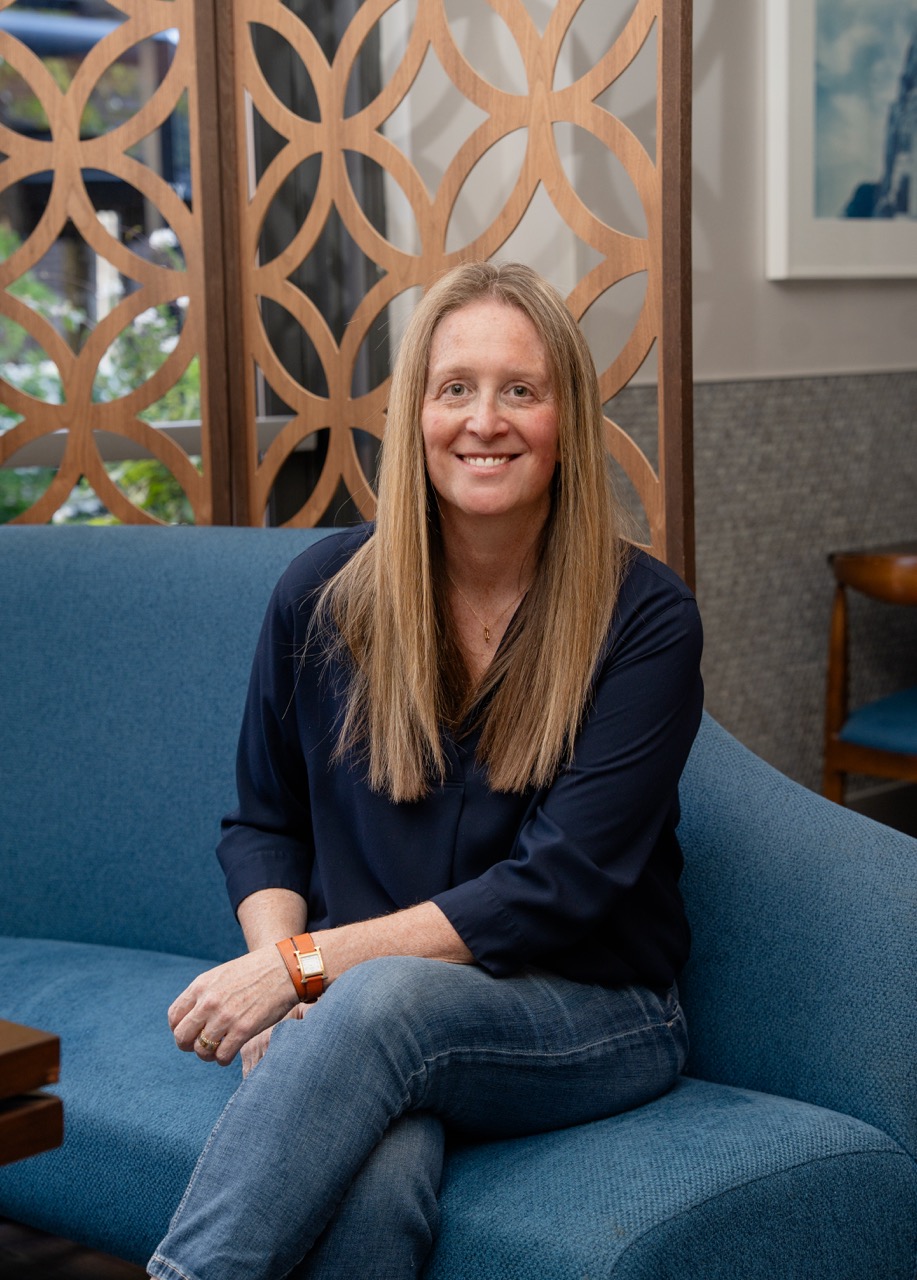
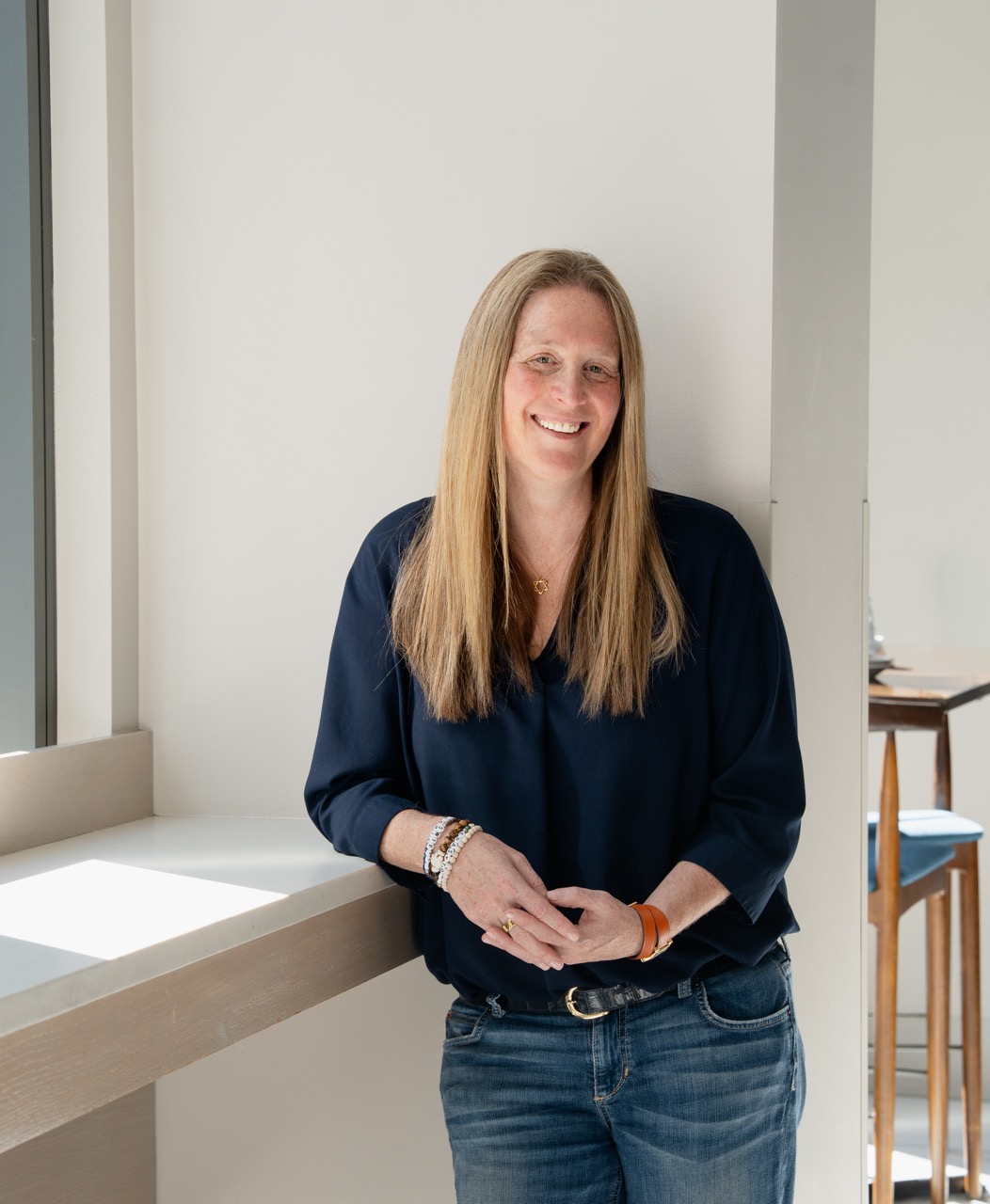
Founder & CEO of Spoonfuls, a local food rescue program that began sixteen years ago with an idea she still calls simple. She has spent every year since on the part that isn’t.
I’m the founder and CEO of Spoonfuls, a nonprofit I started 16 years ago with a pretty simple idea: there is more than enough good food in our communities, and we should be doing a much better job of getting it to people who need it rather than letting it go to waste. Today, Spoonfuls works across the Commonwealth at the intersection of food access and sustainability, feeding 84k people each week.
I grew up in Wellesley and now live in Sherborn with my wife, Kelly, and our two Portuguese Water Dogs, Tucker and Bart. From a young age, I had an unusual window into the worlds of fashion, design, retail, food, and hospitality, at a time when they were still relatively insular, and had the chance to experience some incredibly creative people and places. It gave me an appreciation for originality, craftsmanship, and the details that make something truly special, and probably made me pretty discerning, too. I’ve been fortunate to travel extensively and experience some extraordinary places along the way, but what interests me most is still what makes something memorable. I love great food, great design, and places with a real point of view — but mostly I love the experiences that come with them.
The idea behind food rescue is actually incredibly simple: there’s good food that would otherwise go to waste, and there are people who need it. The complicated part is everything required to connect those two things — the logistics, infrastructure, timing, relationships, and policy that make it possible to do safely and at scale.
And the bigger misconception is that food insecurity is a problem of scarcity. It isn’t. We have plenty of food. It’s a problem of access and a system that allows enormous amounts of good food to go to waste while people struggle to afford it. Spoonfuls moves a lot of food, but ultimately our work is about changing that disconnect — not just moving more pounds from point A to point B.
We have plenty of food. It’s a problem of access.
No one ever wonders what’s on my mind, so I could probably stand to work on my delivery. Probably my life’s work…
For Spoonfuls, the challenge is bigger. So much of what we do is an urgent response to problems that better policy could prevent in the first place. We’re very good at moving food quickly and getting it to people who need it, but I don’t want us to simply get better and better at responding to a broken system. The real opportunity is to help change the conditions that make that response so necessary, and that means using what we learn every day on the ground to push for smarter, more lasting solutions.
Five years from now, success for Spoonfuls is as firmly established as an enduring Massachusetts institution. We’ve spent 16 years proving that the model works and building an organization with real reach and impact; the next chapter is about making sure that work is built to last. That means continuing to grow our impact, but also building the kind of long-term financial strength and the infrastructure that gives an organization real staying power. With the variability of the last few years and what we can expect in the coming ones, that’s key. And, of course, I’d love for better policy and stronger systems to make some of our work less necessary. To me, those things aren’t contradictory: we can build Spoonfuls to be here for the long haul while working toward a future in which fewer people need us.
As for me? Success is pretty simple — the people I love are healthy and happy.
Creativity — in almost any form. I’m inspired by people who see something differently, take a risk, or create something that didn’t exist before. It could be food, fashion, design, music, or a completely new way of solving an old problem.
My team at Spoonfuls. I get to work with people who are extraordinarily committed to what we do, but who also challenge me, surprise me, and make the work better. Sixteen years into this with a growing company, their energy and belief in what’s possible continue to inspire mine.
My Nana — she’s been gone for a few years now, but she is still very much a presence in my life. She is woven into so much of who I am, how I see the world, and what matters to me. I still find myself thinking about what she would say or do.
Nantucket. Most people know that Nantucket is embedded in my soul — my parents were pregnant with me on their first trip there in the late 70s, and it’s been a love affair ever since.
Taylor Swift. Reports of my deep and abiding commitment to Taylor Swift remain both ongoing and credible.
A guide pin from Vizcaya. I have my grandmother’s guide pin from Vizcaya — she was a docent there for a long time, and knew every answer to any question. She could do that in any museum around the world, really. She was a lifelong traveler; she actually climbed Machu Picchu when she was in her 70s! So whenever I take a trip, I always have it with me.
Chances are she’s already been there, but it’s a way to still travel with her.
Spoonfuls is at spoonfuls.org and @spoonfulsfoodrecovery.
If you know someone doing cool sh!t, nominate them at harper@michaelharper.com.