For decades, luxury real estate was defined by scale, craftsmanship, and prestige addresses. Wine cellars, home theaters, and formal entertaining rooms were long considered markers of arrival.
Today, something quieter and far more personal is reshaping how high-net-worth buyers define value. Health has become the ultimate status symbol.
Across global luxury markets, buyers are gravitating toward what many now call performance estates — residences designed to actively support wellness, longevity, recovery, and mental clarity. In these homes, fitness is not an afterthought, and wellness is not a shared amenity down the hall. It is built directly into daily life.
Boston, long associated with education, medicine, and intellectual capital, is beginning to reflect this shift in meaningful ways within its luxury real estate landscape.
Luxury buyers are no longer asking simply whether a home is beautiful. Increasingly, the question is whether it makes life better.
Performance-oriented homes prioritize physical recovery, quality sleep, and environments that support focus and resilience. Attention to air quality, natural light, material health, and spaces designed for movement or meditation has become central rather than supplemental.
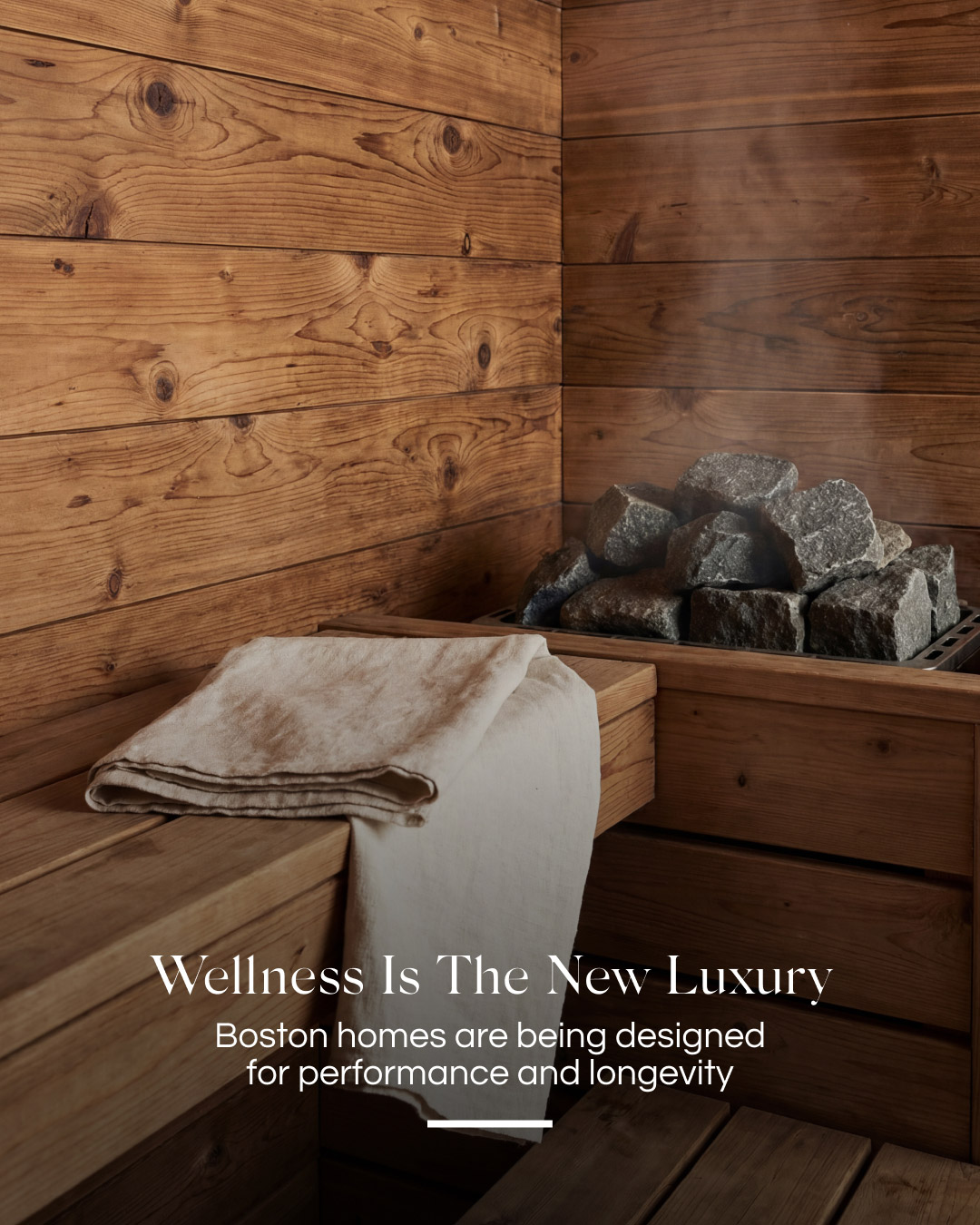
In practical terms, this evolution shows up through features such as infrared and traditional saunas, steam rooms, cold plunge pools, spa-grade showers, private gyms, yoga studios, and advanced air and water filtration systems. These elements, once considered niche, are becoming part of a broader expectation around how a luxury home should function.
While this approach first gained traction in wellness-forward markets like Los Angeles and Miami, Boston’s version is more restrained, shaped by the city’s architecture, climate, and cultural sensibilities.
One of the clearest expressions of the performance estate concept appears not in new construction, but in a meticulously restored historic residence.
At 153 Brattle Street in West Cambridge, a landmark early-19th-century home has been thoughtfully reimagined to support contemporary wellness without compromising its architectural integrity. Beneath the elegance of restored period details and gracious formal rooms lies a fully realized private wellness level, complete with a dedicated gym, steam shower, sauna, and spa-like recovery spaces.
The significance here is subtle but important. Wellness is no longer limited to sleek, modern structures. Even legacy estates, when carefully restored, are being tailored to support longevity and performance alongside beauty and history.
In Boston’s luxury condominium market, wellness has most visibly taken shape through amenity-driven living.
At One Dalton, residents have access to a comprehensive, spa-level wellness environment that rivals leading luxury hotels worldwide. A full-service spa, sauna and steam facilities, state-of-the-art fitness spaces, and recovery-focused environments are integrated directly into daily living.
Residences such as 5402 and 5801/5801 offer a rare combination of private, full-floor living paired with immediate access to these wellness resources. For buyers who value discretion, convenience, and performance-driven amenities, this model is particularly compelling.
Rather than outsourcing wellness to private clubs or external memberships, these residences fold it into the home ecosystem itself.
This shift is not cosmetic. It is behavioral.
Today’s affluent buyers are living longer, working later into life, and placing increasing value on mental clarity, physical resilience, and sustainable energy. As a result, homes are evaluated less as static assets and more as environments that actively support daily performance. Residences that make room for recovery, movement, and rest are no longer viewed as indulgences. They are increasingly understood as long-term investments in quality of life.
In Boston, this resonates deeply. With world-class hospitals, research institutions, and a health-conscious population, the city is uniquely positioned to embrace wellness-forward living in a way that feels authentic rather than trend-driven.