For years, staging was about furnishing a room beautifully enough to help a buyer imagine a life inside it. Today, the conversation is more layered.
We live in a screen-first marketplace. Nearly every luxury property search begins on a phone. The first showing is digital. The first emotional reaction happens through a photograph.
That reality has changed how homes are presented, particularly in Boston’s upper tier.
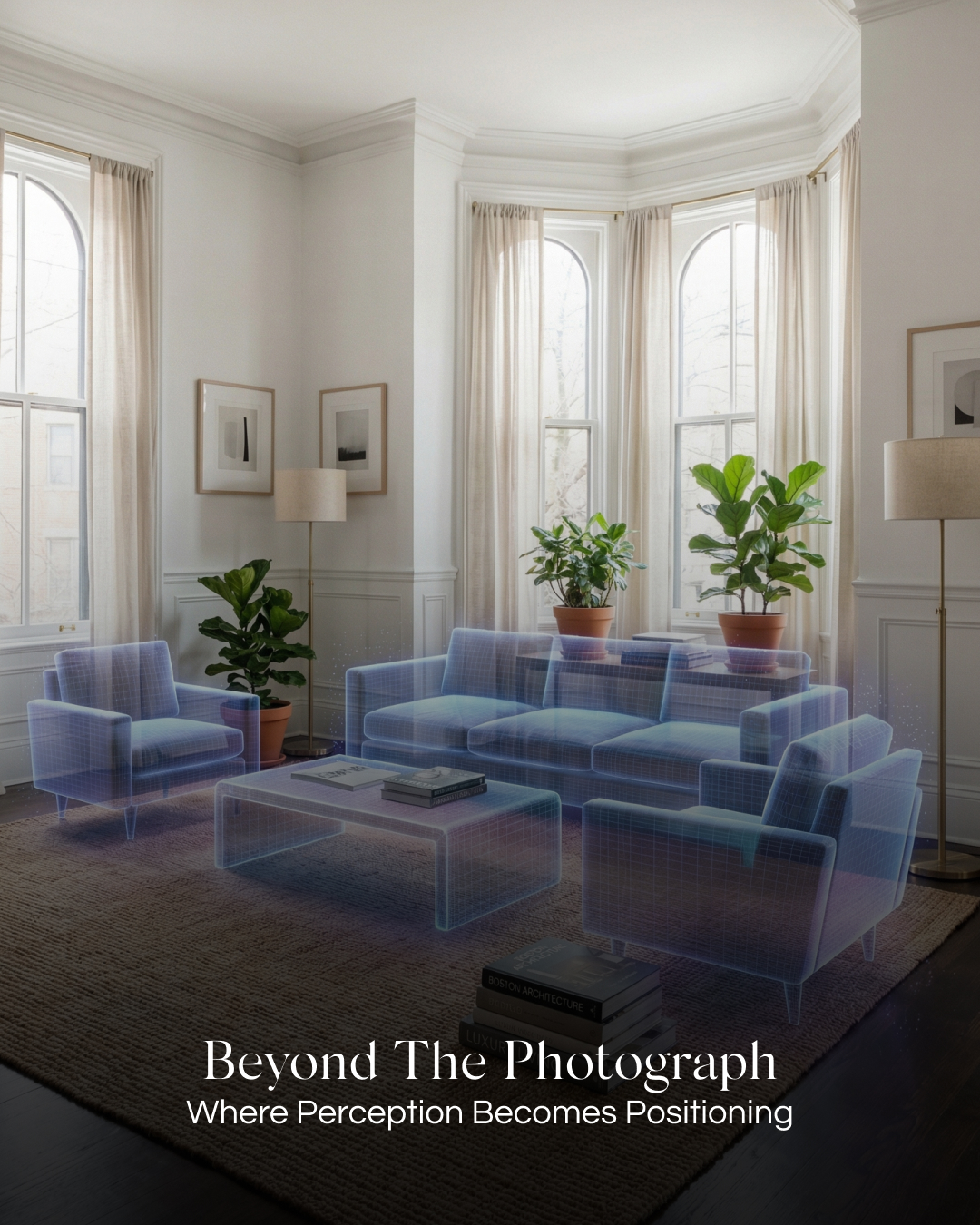
Virtual staging began as a simple solution to empty rooms. It softened sharp corners, suggested scale, and added warmth to photographs that might otherwise feel stark. In many cases, it served its purpose well. It helped buyers understand proportion. It helped a listing compete online.
But the technology is evolving quickly.
Today, advanced rendering tools and augmented reality platforms allow something far more interesting than decorative furniture overlays. Buyers can now digitally place their own furnishings into a space. They can test layouts. Experiment with art. Adjust finishes. Some platforms even allow real-time visualization during private showings through tablets or headsets.
This is not illusion. It is personalization.
For high-net-worth buyers, especially those under fifty, customization is a form of control. They are not looking to be told how to live in a space. They want to understand how the space can adapt to them.
That is a very different conversation from traditional staging.
And yet, technology cannot replace atmosphere.
Luxury real estate is ultimately a sensory experience. It is the weight of a door, the quality of natural light at four in the afternoon, the acoustics of a room when you speak. No rendering can replicate scale in motion or the emotional subtlety of well-proportioned architecture.
In Boston, taste tends to favor authenticity over spectacle. Buyers respond to spaces that feel resolved. Thoughtful physical staging, when done correctly, does not decorate. It clarifies. It reveals flow. It demonstrates intention.
The goal is not to impress. It is to remove friction between a buyer and a decision.
The most compelling presentations today are not choosing between digital or physical. They are integrating both.
Digital visualization helps a buyer see the possibility. Physical staging helps them feel certainty.
In a market where discretion and discernment matter, trust becomes the differentiator. If the online representation feels exaggerated, credibility is lost. If the home delivers precisely what was promised, confidence builds.
Luxury buyers are decisive, but they are also highly attuned to inconsistency. Presentation should never feel like persuasion. It should feel like clarity.
When preparing a property in Back Bay, Beacon Hill, or the South End, the question is not “How do we win the click?” It is “How do we reveal the architecture honestly while allowing room for imagination?”
Sometimes that means refined physical staging. Sometimes it means digital visualization tools that allow a buyer to project their own life into the space. Increasingly, it means both.
As technology continues to evolve, the opportunity is not to create illusion. It is to create alignment between what a buyer sees online and what they feel when they arrive.